
How to Tune a Car Engine the Right Way at Home
Want to know how to tune a car engine? You probably picture race cars, dyno rooms, and laptops plugged into ports under the dashboard. The truth is much simpler. Tuning just tells your engine to do its job a little differently. Sometimes for more power. Sometimes for better fuel economy. Sometimes just for a sharper feel when you press the gas.
So what is tuning a car engine? It really comes down to two things. How your engine mixes fuel and air. And when it fires the spark plug. That’s it. Everything else is just tools to help you change those two settings. Learning how to tune a car engine for performance starts with one idea. Your car isn’t running at its best from the factory. And you can fix that.
Why Isn’t Your Car Already Tuned?
Fair question. You paid for the car. So why isn’t it tuned from the start?
Makers leave power on the table on purpose. One tune has to work in cold weather and hot. With cheap fuel and premium. For ten years of use. And it has to meet emissions rules in every country. So the factory tune is always a compromise. Your car can do more than the badge says. You just have to unlock it.
How to Tune a Car Engine, Step by Step
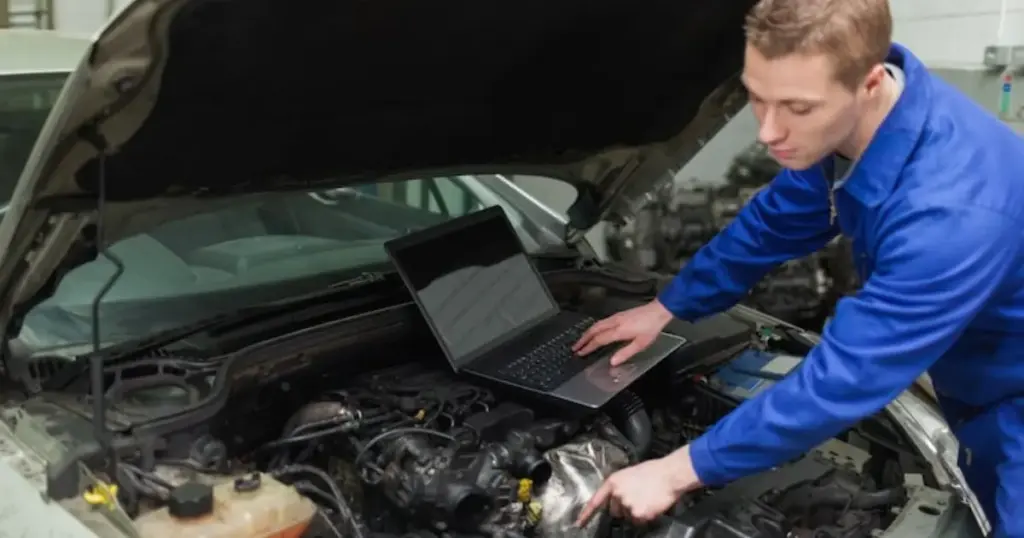
The two settings above are what you change. This is how you change them without hurting the engine DIY or at a shop. The order matters.
- Start with a healthy engine. A tune can’t fix worn parts. It hides them, then makes them worse. Fresh spark plugs, clean oil, no vacuum leaks, solid compression. Sort the basics first.
- Pick your method. Most cars take one of three: an ECU remap (rewrites the factory software), a piggyback tuner (intercepts signals without touching the original software), or a standalone ECU (a full replacement for built engines). Your goal and your car decide which.
- Read before you write. Plug a laptop into the OBD-II port, open the tuning software, and pull the factory maps and live data first. You want a clean baseline and a chance to clear any trouble codes hiding in there before you change a single value.
- Change one thing at a time. This is where fuel and timing actually get touched. Nudge the fuel map a little, do a logged pull, and read the data. Then the timing. Small steps, one variable each. Chase both at once, and you’ll never know which change did what. That’s the line between a tune and a guess.
- Watch for knock obsessively. A wideband oxygen sensor shows your real air-fuel ratio; a knock sensor or audio detection catches detonation. Knock destroys engines faster than you can react, so you pull timing the moment it shows up, not after.
- Validate it. A dyno gives repeatable numbers and a safe place to push. No dyno? Controlled road testing on a clear, flat stretch is fine for mild tunes, never for aggressive ones.
- Support the new demands. Past a Stage 1 map, the tune needs backup: higher-octane fuel, colder spark plugs, and shorter oil-change intervals stop being optional.
A Quick Comparison of Tuning Methods
| Method | What It Changes | Best For |
|---|---|---|
| ECU Remap | Factory software (fuel, timing, boost) | Most modern cars with stock ECUs |
| Piggyback Tuner | Signals going to and from the ECU | Reversible modifications |
| Standalone ECU | Complete engine management | Race cars, heavily modified builds |
| Bolt-On Parts | Airflow in (intake) and out (exhaust) | Supporting any of the above |
| Dyno Tuning | Custom, vehicle-specific tune | Validating gains and safety |
Can You Tune a Car Yourself?
Yes. With some patience and the right tools.
You’ll need a laptop. A wideband air-fuel ratio meter. An audio knock detection setup. And tuning software for your car. None of this is super expensive these days. There are good online courses too. But if your car is brand new, take it to a pro. It’s worth it.
Conclusion
So that’s how to tune a car engine. It isn’t magic. It’s just two settings. Fuel and spark. You match them to your engine, your fuel, and how you drive. Do it yourself or take it to a shop. The goal is the same. A car that runs better than the day you bought it.
Frequently Asked Questions
What does engine tuning actually do?
Engine tuning changes how your ECU controls fuel and timing. The result? More horsepower and torque. Sometimes better fuel economy. And a sharper feel when you hit the gas.
Will tuning my car damage the engine?
A good tune won’t damage your engine. Damage happens when people push too hard. They skip supporting parts. They ignore the knock. They use cheap fuel. Stay within safe limits and your engine will last longer, not shorter.
How much extra power will I gain from tuning?
It depends on your car. Turbo engines often gain 15–30% from a remap alone. You can safely raise the boost. Naturally aspirated engines gain less. Around 5–10%. Add bolt-on parts to get more.
Do I need to modify other parts after tuning?
For a mild tune, no. For a bigger tune, yes. More power means more heat. More pressure. More stress on parts. You may need colder spark plugs. Higher-octane fuel. And shorter oil change intervals.
What is the difference between a tune-up and engine tuning?
A tune-up is basic maintenance. New spark plugs. New filters. Fresh fluids. It just restores factory performance. Engine tuning is different. It changes how the engine actually runs. The goal is more power, a better economy, or a sharper response.